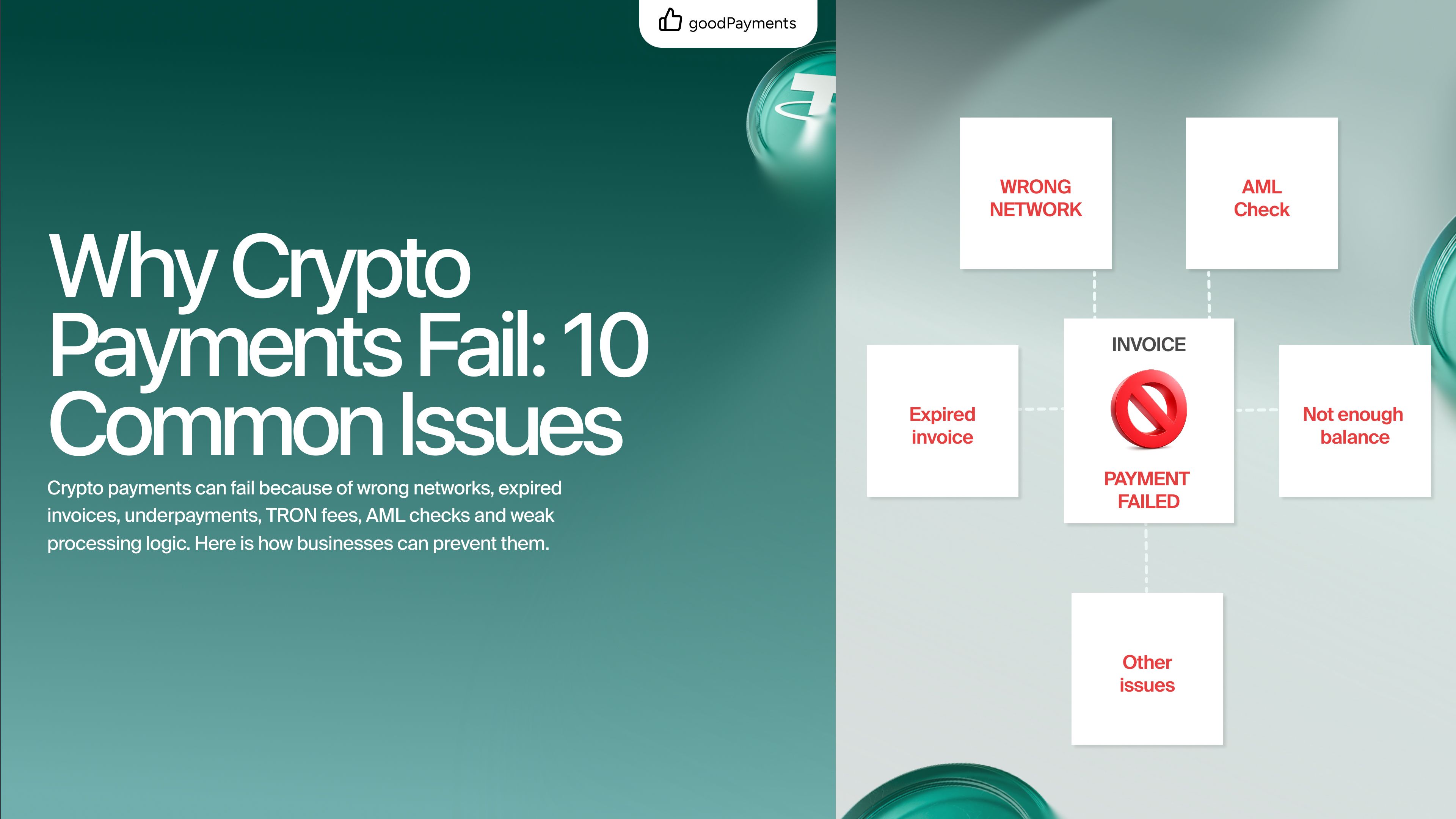
Why Crypto Payments Fail: 10 Common Issues (And How to Prevent Them)
Learn why crypto payments fail, from wrong blockchain networks to expired invoices and AML checks, and discover how businesses can prevent lost transactions.

TRC20 is a token standard built on the TRON blockchain. It is widely used for transferring USDT (Tether), one of the most popular stablecoins in the world.
For businesses, TRC20 matters because it offers a fast and cost-efficient way to process crypto payments.
Compared to other networks, TRC20 is known for:
This makes it one of the most practical options for accepting USDT payments at scale.
Many companies specifically choose TRC20 when accepting crypto payments.
Here’s why:
For high-volume businesses, these benefits can translate directly into higher margins and better cash flow.
Understanding the basic flow helps businesses implement payments more effectively.
A typical TRC20 payment looks like this:
Because transactions are processed on-chain, there are no intermediaries involved.
In non-custodial setups, funds go directly to your wallet, giving you full control.
Setting up TRC20 payments is straightforward when using the right tools.
1. Create a wallet
Set up a wallet that supports USDT (TRC20).
This is where you will receive all payments.
2. Choose a payment solution
Select a gateway that supports:
3. Connect Your Wallet
Add your wallet address to the system so payments are sent directly to you.
4. Integrate Payments
Depending on your setup, you can:
Most businesses can complete this step quickly without complex development.
5. Test and go Live
Run a test transaction to confirm everything works correctly, then start accepting payments.

GoodPayments is specifically designed to maximize the advantages of TRC20 payments:
This allows businesses to benefit from TRC20’s speed and low fees without added complexity.
TRC20 has become one of the most efficient ways to process crypto payments, especially for businesses working with USDT.
It combines:
With the right setup, TRC20 payments can significantly improve how businesses accept and manage payments in 2026 and beyond.
To implement this in practice, follow our step-by-step USDT payment guide.
Learn why crypto payments fail, from wrong blockchain networks to expired invoices and AML checks, and discover how businesses can prevent lost transactions.
Learn why Stripe freezes accounts, what triggers payment holds, and how to reduce the risk. Discover alternatives like crypto payments for more control.
Want to start accepting USDT payments but don’t know where to begin? This step-by-step guide shows how to set up crypto payments quickly, avoid common mistakes, and keep full control of your funds.