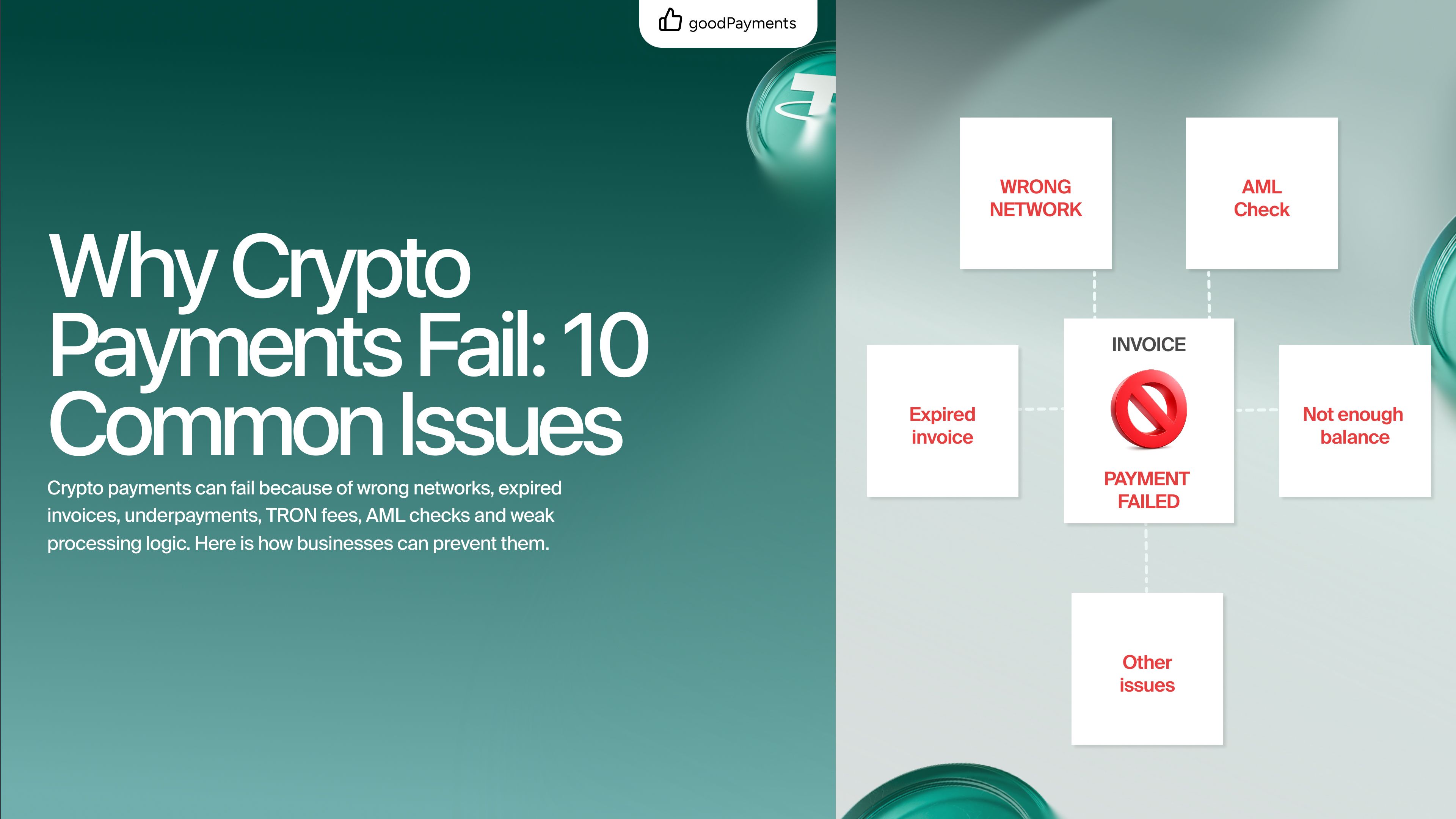
Why Crypto Payments Fail: 10 Common Issues (And How to Prevent Them)
Learn why crypto payments fail, from wrong blockchain networks to expired invoices and AML checks, and discover how businesses can prevent lost transactions.



Stripe is one of the most widely used payment processors for online businesses. It offers a simple setup, global coverage, and a developer-friendly infrastructure.
However, many businesses eventually encounter a common issue — account restrictions, payout delays, or even full account freezes.
Understanding why this happens is essential, especially for companies operating in high-risk or fast-scaling environments.
Stripe operates as a regulated financial intermediary and must comply with strict anti-fraud, AML, and risk management requirements.
Account restrictions usually occur when the system detects elevated risk signals.
1. High-risk business models
Certain industries are inherently considered higher risk:
These categories often involve higher dispute rates or regulatory complexity.
2. Rapid transaction growth
Sudden spikes in payment volume can trigger automated risk checks.
From a risk perspective, rapid scaling may indicate:
3. Chargebacks and disputes
Stripe continuously monitors dispute ratios.
Even moderate increases can result in:
4. Traffic and compliance signals
Businesses with unclear funnels, aggressive advertising, or insufficient compliance disclosures may be flagged.
This includes:

When an account is flagged, several limitations may apply:
In more severe cases, accounts may be permanently closed.
For businesses that depend on stable cash flow, even temporary holds can significantly impact operations.
Businesses can reduce risk by:
However, risk cannot be fully eliminated - especially in high-risk industries.
To reduce dependency on traditional payment processors, some businesses integrate crypto payments into their payment stack.
This approach offers several differences:
As a result, businesses gain more control over their payment flow.

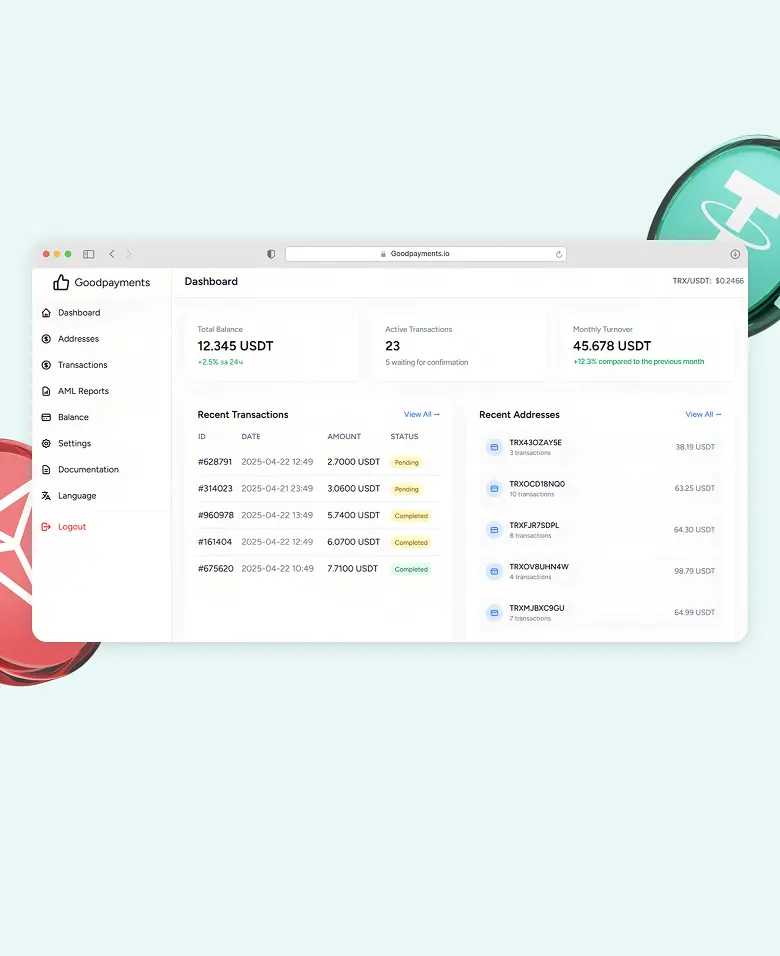
For teams looking to implement crypto payments in practice, solutions like goodPayments provide a simple way to integrate this model.
With goodPayments, businesses can:
The integration is designed to be straightforward, making it suitable for both small teams and high-volume projects.

Crypto-based processing may be relevant if:
Stripe remains a strong solution for many traditional businesses.
However, for companies operating in high-risk or fast-scaling environments, account restrictions are not an exception - but a structural limitation.
Understanding these risks allows businesses to build more resilient payment strategies and reduce dependency on a single provider.
Learn why crypto payments fail, from wrong blockchain networks to expired invoices and AML checks, and discover how businesses can prevent lost transactions.
Learn how TRC20 payments work and why businesses use USDT on TRON. Step-by-step guide with setup, benefits, and best practices.

Want to start accepting USDT payments but don’t know where to begin? This step-by-step guide shows how to set up crypto payments quickly, avoid common mistakes, and keep full control of your funds.