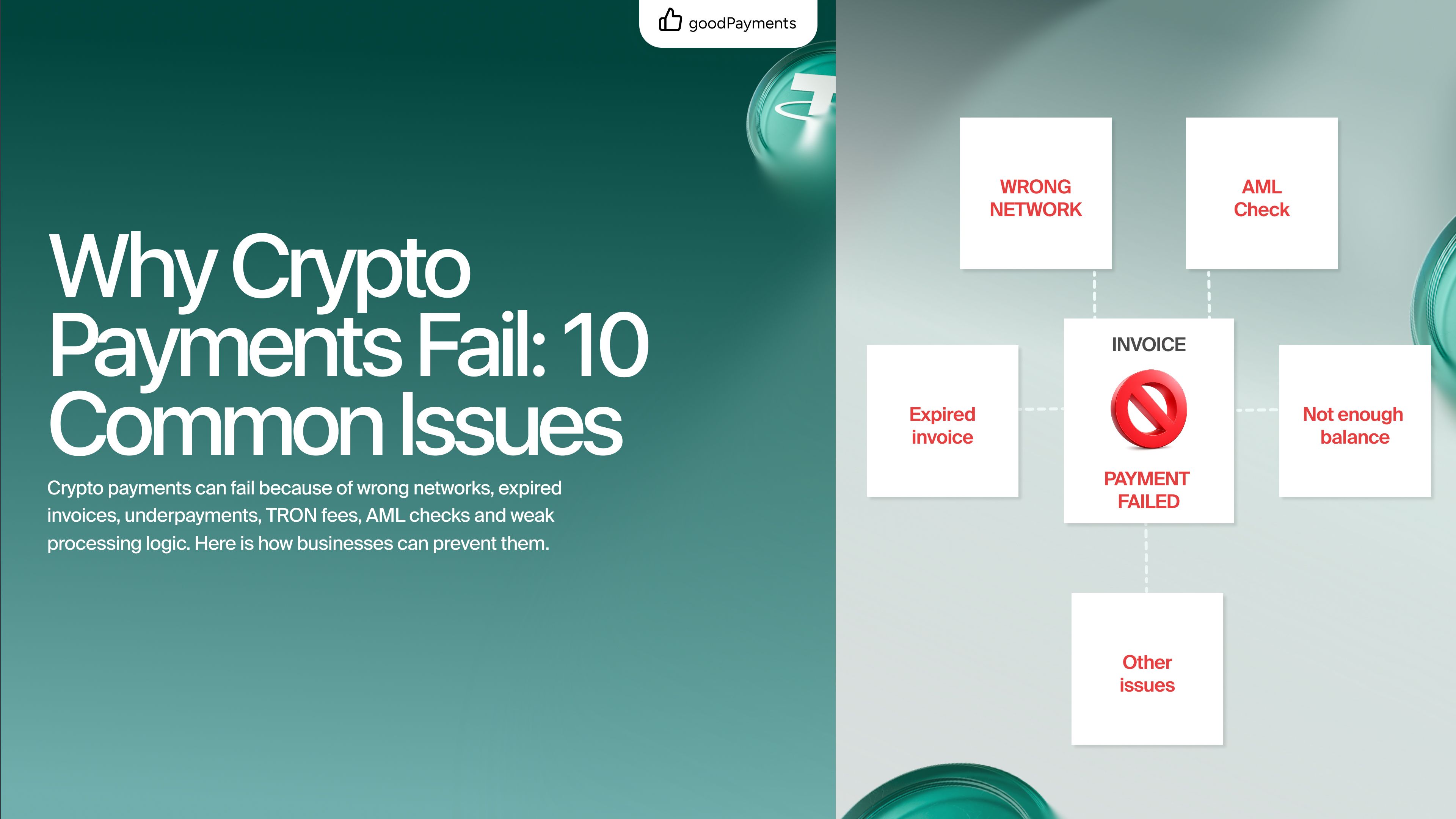
Why Crypto Payments Fail: 10 Common Issues (And How to Prevent Them)
Learn why crypto payments fail, from wrong blockchain networks to expired invoices and AML checks, and discover how businesses can prevent lost transactions.

USDT (Tether) has become a go-to payment method for online businesses that want speed, stability, and global reach.
Unlike most cryptocurrencies, USDT is a stablecoin pegged to the US dollar. This means you can accept crypto payments without worrying about price volatility.
For businesses, the advantages are clear:
In practice, USDT combines the predictability of fiat with the efficiency of crypto.
Getting started doesn’t require complex infrastructure. You only need a few core components:
The most important decision here is your payment setup.
Some providers act as intermediaries and hold your funds, while others (like goodPayments) let you receive payments directly to your wallet, giving you full control.
Here’s how businesses typically start accepting USDT payments:
1. Create your account
Sign up with a payment solution that supports USDT (TRC20).
With modern platforms like GoodPayments, onboarding is instant and does not require KYC.
2. Connect your wallet
Add your wallet address where funds will be sent.
With a non-custodial setup, payments go directly to your wallet, not through a third-party holding account.
3. Choose integration method
Depending on your needs, you can:
Most businesses can go live without deep technical work.
4. Test the payment flow
Before accepting real payments:
This ensures everything works smoothly.
5. Start accepting payments
Once set up, you can accept USDT from customers worldwide - instantly and without banking restrictions.
Even though setup is simple, there are a few common pitfalls:
Avoiding these mistakes can significantly improve both margins and user experience.
goodPayments is built specifically to remove friction from crypto payments:
Instead of acting as a middleman, GoodPayments gives businesses full control over payments and revenue.

Accepting USDT payments is no longer a complex or experimental process - it’s a practical upgrade for modern businesses.
With the right setup, you can:
For many businesses in 2026, USDT isn’t just an alternative - it’s becoming a standard way to accept payments.
If you’re new to crypto payments, start with our guide on what a crypto payment gateway is.
Learn why crypto payments fail, from wrong blockchain networks to expired invoices and AML checks, and discover how businesses can prevent lost transactions.
Learn why Stripe freezes accounts, what triggers payment holds, and how to reduce the risk. Discover alternatives like crypto payments for more control.
Learn how TRC20 payments work and why businesses use USDT on TRON. Step-by-step guide with setup, benefits, and best practices.